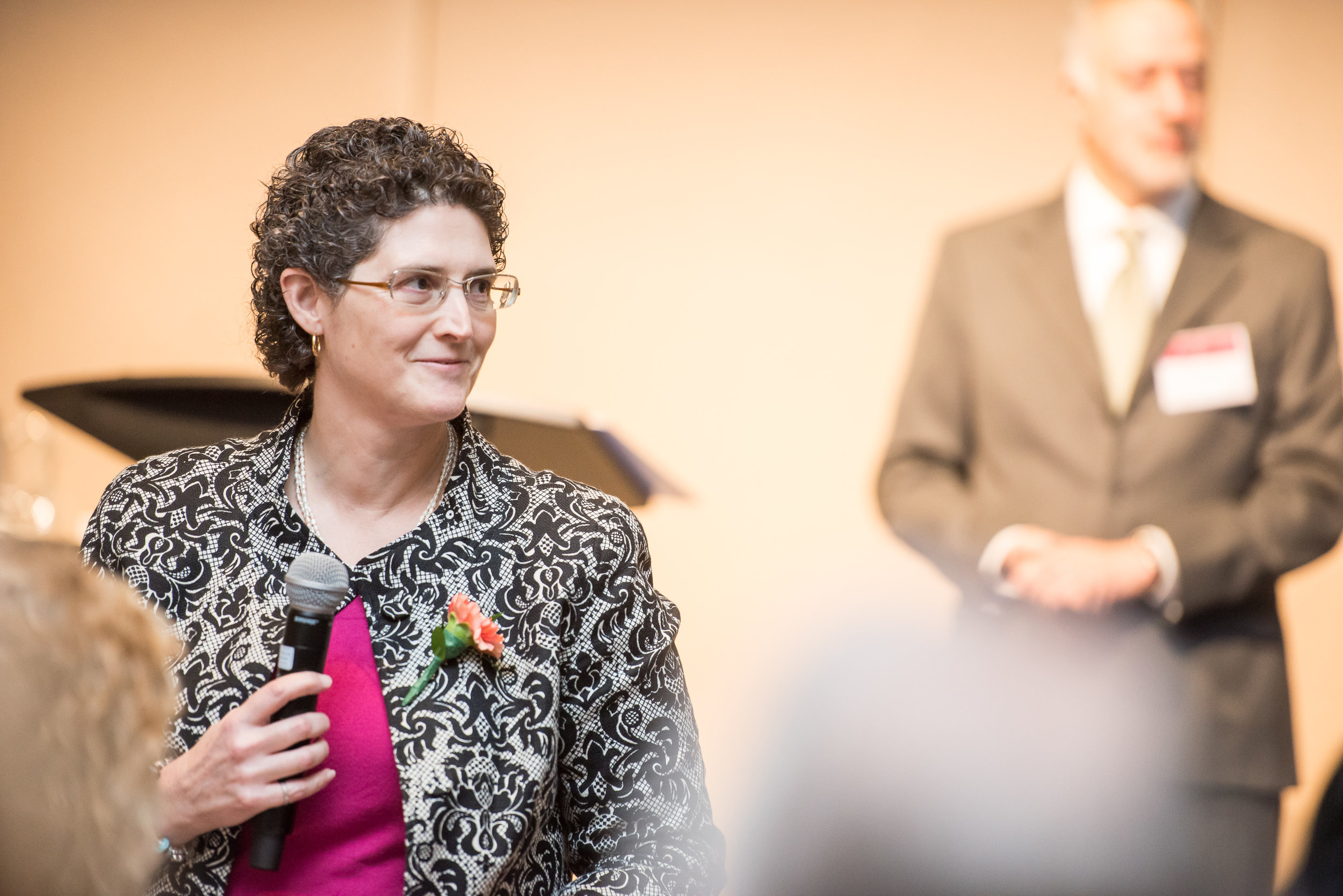
C. Nadine Wathen, PhD, FCAHS
GENDER-BASED VIOLENCE × knowledge MOBILIZATION × health equity
I am a Full Professor in the Arthur Labatt Family School of Nursing at Western University, and former (April 2019- March 2026) Canada Research Chair (SSHRC, Tier I) in Mobilizing Knowledge on Gender-Based Violence. From July 2021 to June 2026 I served as Academic Director of the Centre for Research on Health Equity & Social Inclusion. I’m also a Research Scholar at the Centre for Research and Education on Violence Against Women and Children in Western's Faculty of Education, and hold cross-appointments in Western's Faculty of Information & Media Studies (FIMS), and Department of Gender, Sexuality & Women’s Studies. I also founded Western's Joint Graduate Program in Health Information Science (HIS).
Open my Narrative CV HERE (May 2026).
Open my Full CV HERE (May 2026).
I am an inter-disciplinary researcher, with well-established and productive partnerships with scholars, clinician-scientists, and non-academic partners from a number of academic institutions, governments, non-government organizations, and community agencies. Through a social justice lens, I take a collaborative research approach to answer – both theoretically and at a more practical level – important questions in the area of gender-based violence and health equity.
My research has developed and evaluated interventions for women experiencing violence, seeking to enhance the science of knowledge mobilization (KMob) to ensure that new knowledge emerging from research is made available, in appropriate ways, to decision-makers including policy actors, health and social service providers, advocates, and members of the public. A particular focus has been developing interventions that enhance health equity, taking a gendered, trauma- and violence-informed approach to providing services for people experiencing violence and/or marginalization.
More recently, I have focused on ways to embed our research findings into impactful and sustainable knowledge mobilization strategies and products. A key way to do this for practitioners is co-creating accessible, highly usable and relevant online learning and practice resources. For example, see our suite of resources, co-developed with and for the gender-based violence sector, here.
You can hear me describe my research below.